Upon graduating from the L. Jeffrey Selznick School of Film Preservation in June, I was pleased to learn I had been awarded a Fellowship at the Rockefeller Archive Center (RAC), and that I’d be working under fellow Selznick alum and current RAC Sound & Moving Image Archivist Brent Phillips. In addition to my prior work experience as a professional film negative cutter and the recent Selznick program, the opportunity to train in an apprentice/colleague-style position at the RAC has been invaluable for rounding out my film archiving knowledge and skill set.
Over the course of ten weeks, I’ve worked alongside Brent doing a myriad of tasks:
- Conducted an intensive survey of 532 collections containing 8,777 undigitized audiovisual items and assessed this material for digitization priority.
- Created and administered two film-handling workshops for RAC staff to familiarize them with basic film knowledge and provide hands-on inspection skills.
- Reviewed and updated 3,800+ film inspection records in the RAC Film Registry.
- Prepared 175 audio recordings for shipment to a vendor for digitization and re-inspected these tapes upon return to the RAC post-digitization.
- Observed how the FFV1 codec has been implemented in large-scale video digitization projects.
- Assisted the Collections Management team in a vault move between the Main House and an offsite vault, as well as helped in the appraisal process for obtaining new collection materials.
- Assisted RAC researchers with film viewing requests and playback on a Steenbeck flatbed viewer.
- Inspected various 16mm film collections.
Transcoding Video
When I first arrived at the archive center, Brent was completing a multi-phased video transcoding project, receiving from their vendor hundreds of transcoded files created from previously digitized uncompressed video masters. With their newly adopted FFV1 protocols in place, RAC was to receive three transcoded copies of their digitized media: master, mezzanine, and access files. Adopting FFV1 meant that the master (.mkv) copy of the video would be formatted in a manner that the compressed video is virtually lossless and offers reversibility to the uncompressed version. This translates to a digital storage savings of up to 50% of the uncompressed master, and even with the addition of the mezzanine (ProRes HQ) and access (mp4) files, the storage savings still comes out to about 30%. In the Q.C. phase of this project, the newly transcoded files were inspected using the MediaConch policy checker to ensure they met the technical file specifications outlined in the FFV1 protocols. While I had recently learned about the benefits of FFV1 (it’s a money saver for the archive and provides high quality derivatives for professional use and researcher access), seeing it in practical application really illustrated its advantages.
Audio Digitization
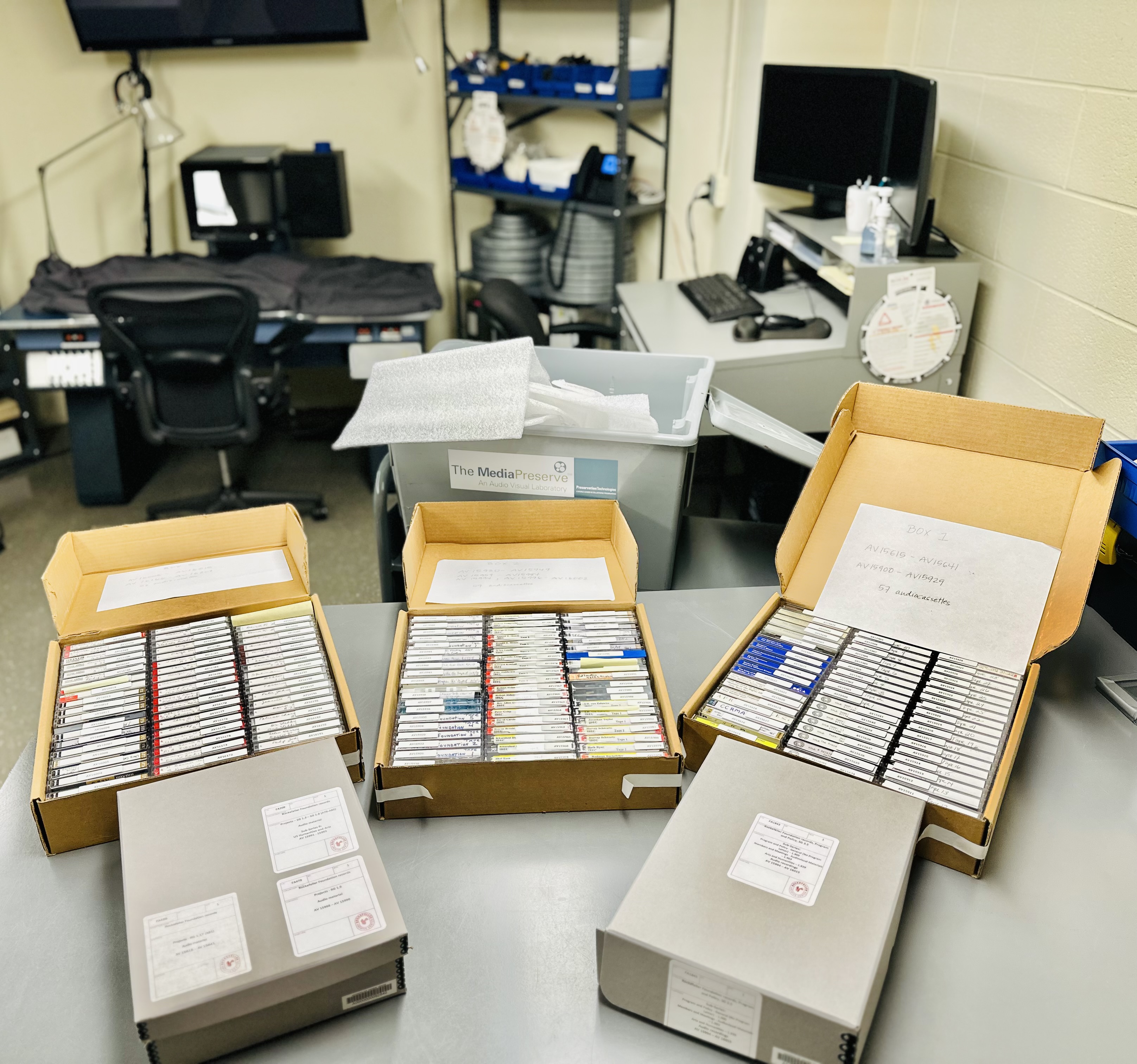
As the video transcoding project was winding down, Brent was getting ready to ship off a batch of 170+ audiocassettes (and a couple of audio reels) for digitizing. He had previously selected the tapes based on age and content uniqueness but also included a researcher digitization request. We packed and shipped this material to the vendor, receiving back the digital masters and access mp3 files within a few weeks! In addition to adding these new access files to the RAC’s Virtual Vault for researcher consumption, Brent directly sent the researcher the files requested, and she responded with gratitude, stating she never dreamed she would be able to hear the actual voices of her research subjects. What a satisfying conclusion to a project!
Collections Survey for Digitization Selection
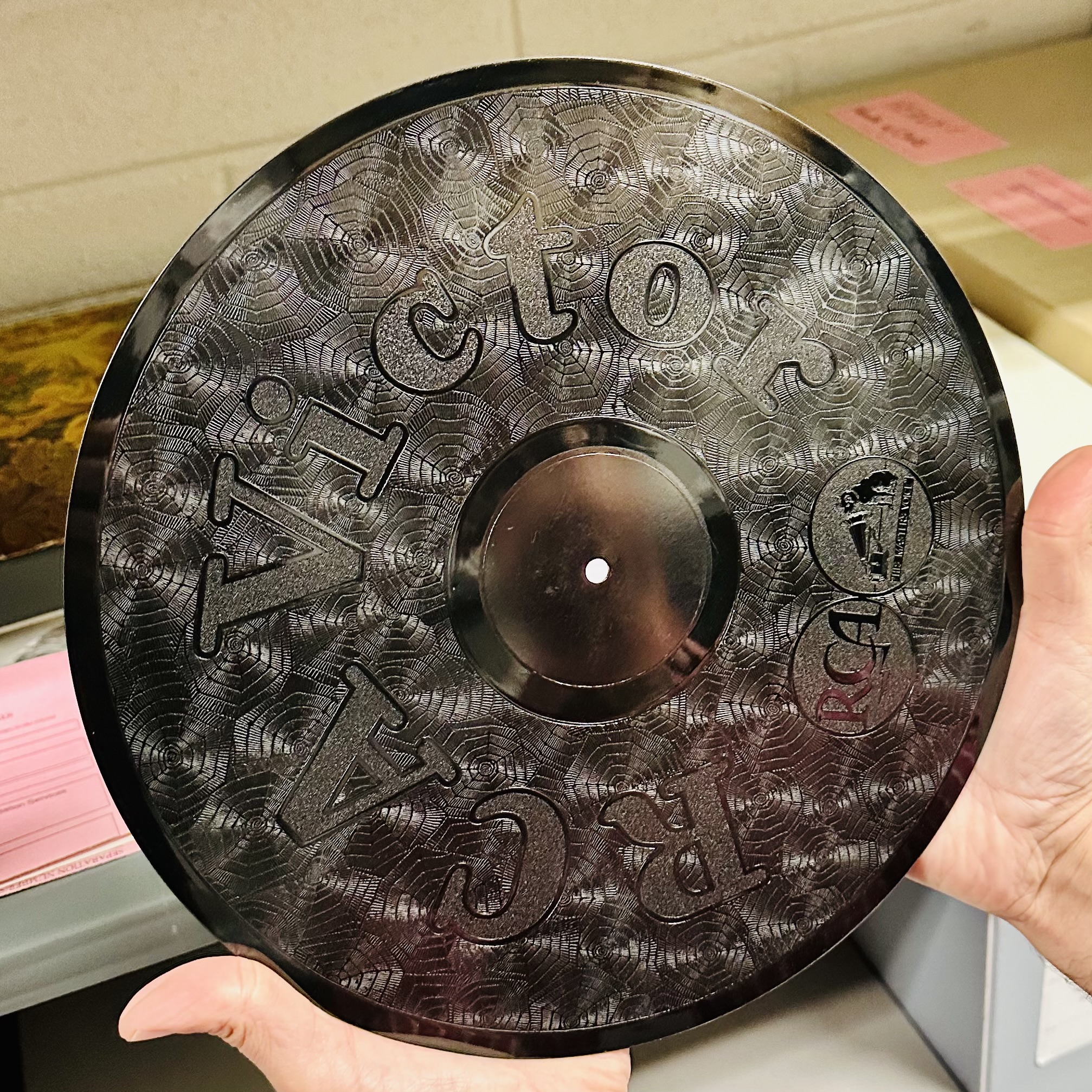
Appealing to my instincts to organize, the vault survey we undertook was particularly instructional for how institutions assess and prioritize audiovisual collections for future digitization projects. This survey of nearly 9,000 audiovisual items (videos, audio tape, and phonographic recordings) took into consideration playback obsolescence and stability of a variety of formats, as well as the object’s age, condition, and the rarity of content to determine what items should be included in future digitization projects.
Vault Management
Working under Collections Management Assistant Director Suzie McDade and her team, I assisted with a well-organized, multi-day vault move, delivering less-frequently-used collections to an offsite vault location and swapping frequently requested collections to the Main House. This move required careful checks and balances of the physical items against the inventory list to ensure everything found its correct shelf in its new home. Similarly, I participated in an appraisal session at a donor’s home. Under Appraisal Archivist Meg Snyder’s guidance, I took notes of the items being donated while condition and collection relevance were being assessed. Redundant items and those that didn’t fit the RAC collections profile were separated out and like items were grouped together to be placed in temporary boxes, their contents sketched to streamline the later processing phase.
Motion Picture Film
Getting my hands on film is what I know best, and I had the opportunity to see how RAC handles researcher requests to view film on site. A researcher who had travelled across the globe (!) requested a 16mm film from the Rockefeller Foundation collection. The film was retrieved from the vault, I inspected it for playability, and Brent and I screened it for her on the Steenbeck in the Preservation Lab. Working directly with the researchers requesting access seems to be one of the most satisfying aspects of doing preservation and conservation duties.
Even archives that are not devoted entirely to film, like the RAC, many institutions hold some amount of film in their audiovisual collections. When film is not at the center of the collections it can be difficult to know its needs and how it fits into the greater collection criteria and mission. I put my previous work experience and new historical film knowledge to the test by creating a film identification and handling workshop for RAC staff. We had an excellent turnout in two separate sessions, and participants left with the ability to identify the most common elements and perform a basic hands-on inspection of film using best practices.
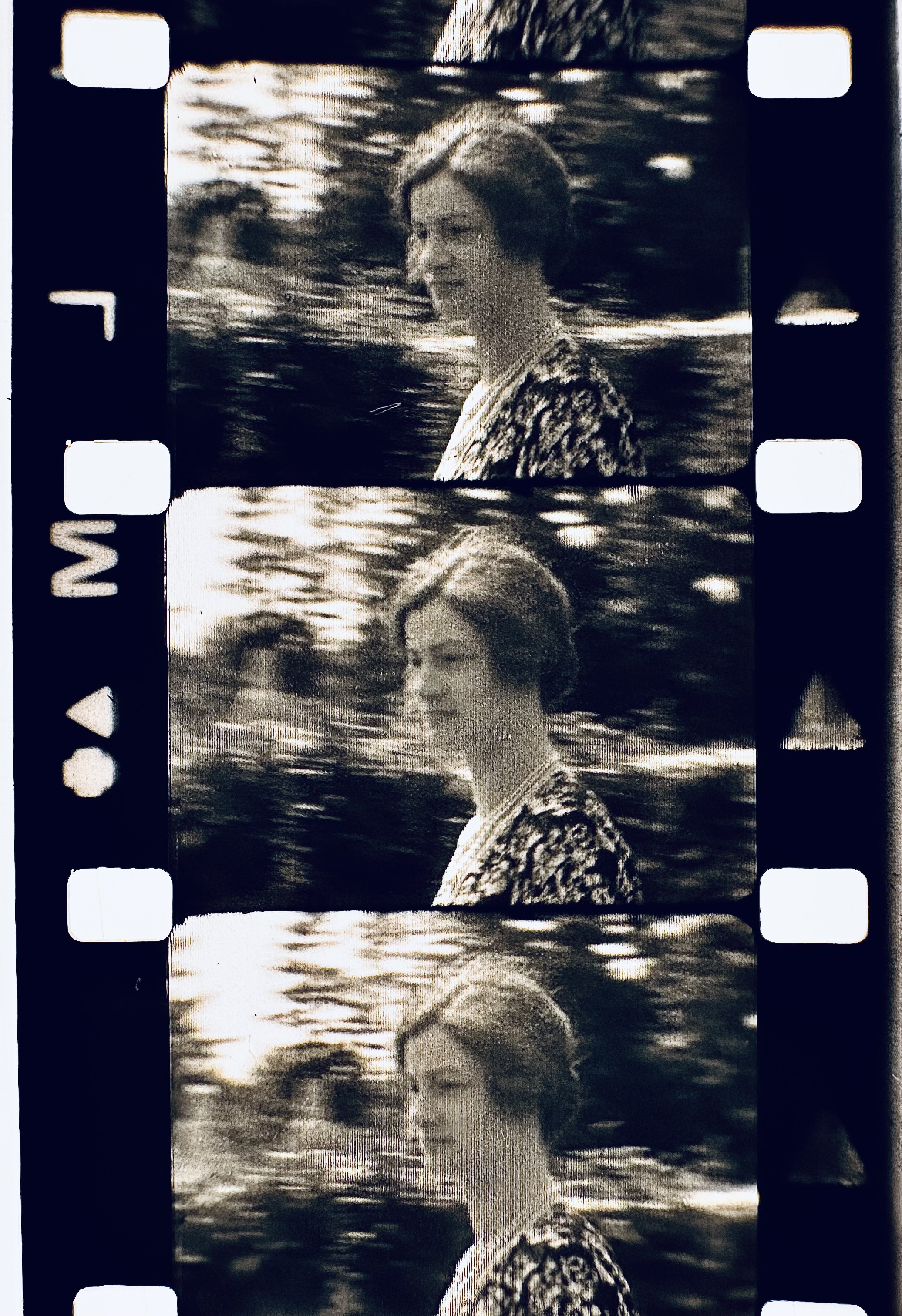
A special experience for me was inspecting a selection of Nelson A. Rockefeller’s 1930 honeymoon films. Shot by Rockefeller on 16mm Kodacolor lenticular film, this was a rare treat to look at an early, and briefly-lived, additive color process.
Along with the creation of my own film inspection reports, an ongoing project of mine has been updating the RAC Film Registry by consulting previous film inspection reports. After this data has been verified and recorded, I created a new version of the registry with clarifications, additions, and consolidations of the data, as well as an updated inspection form that reflects how information will be used later in the digitization, research, and access phases.
Final Reflection
It was not so much a leap of faith, as it was a leap of hope when I decided to uproot my life and attend The L. Jeffrey Selznick School of Film Preservation at the George Eastman Museum in Rochester, New York. Coming from Seattle where I had been working for 14 years doing archival negative cutting and conforming (technical editing). I had worked with the older titles dating back to the 1970s, but after attending the FIAF Summer School program at L’Immagine Ritrovata in Bologna that I got a taste of the full workflow for preserving truly old films. This sampling came with an introduction to how film is archived, and I was inspired to pivot my career to become a film archivist and enroll at Selznick. My true passion remains film conservation, but I now have a fuller understanding of how that work fits into keeping film available for future generations.
My time at the Rockefeller Archive Center flew by in the best way possible. What a pleasure to work under such an experienced audiovisual archivist committed to preparing new archivists for the archival workplace, and the helpful and welcoming RAC staff at a beautiful “house” in a scenic Hudson Valley setting. Everyone was enthusiastic about their work and happy to share their knowledge with each other – and with me. It was inspiring to see such a cohesive staff and leadership who clearly value getting the job done precisely while also maintaining a work-life balance. I can only hope that the next phase of my career will be as part of such an amazing team.