This year’s iPRES was one of firsts. It was the conference’s first time in Aotearoa New Zealand. For me, it was the first time presenting at an international conference. My panel, “Reflections on the Field: Experiences of Early Career Digital Preservation Practitioners,” discussed personal experiences of BIPOC digital preservation workers in a US context. And it was the first time over half of in-person participants were attending iPRES for the first time. This feels like an important connection given a perceivable shift in the international digital preservation community to reach out and include information professionals from regions not typically represented on global stages. That spotlight showed that the challenges faced by these workers and institutions are often vastly different than those faced in the global north.

The opening keynote was given by Hon. Simon Kofe, Tuvalu Minister of Transport, Energy, Communications and Innovation. He talked about how rising sea levels are projected to overtake all of Tuvalu’s land mass in the next two to three decades and what that means for the island nation and its citizens. Tuvalu has initiated a project to digitize and preserve its history, government, and culture as the world’s first digital nation.
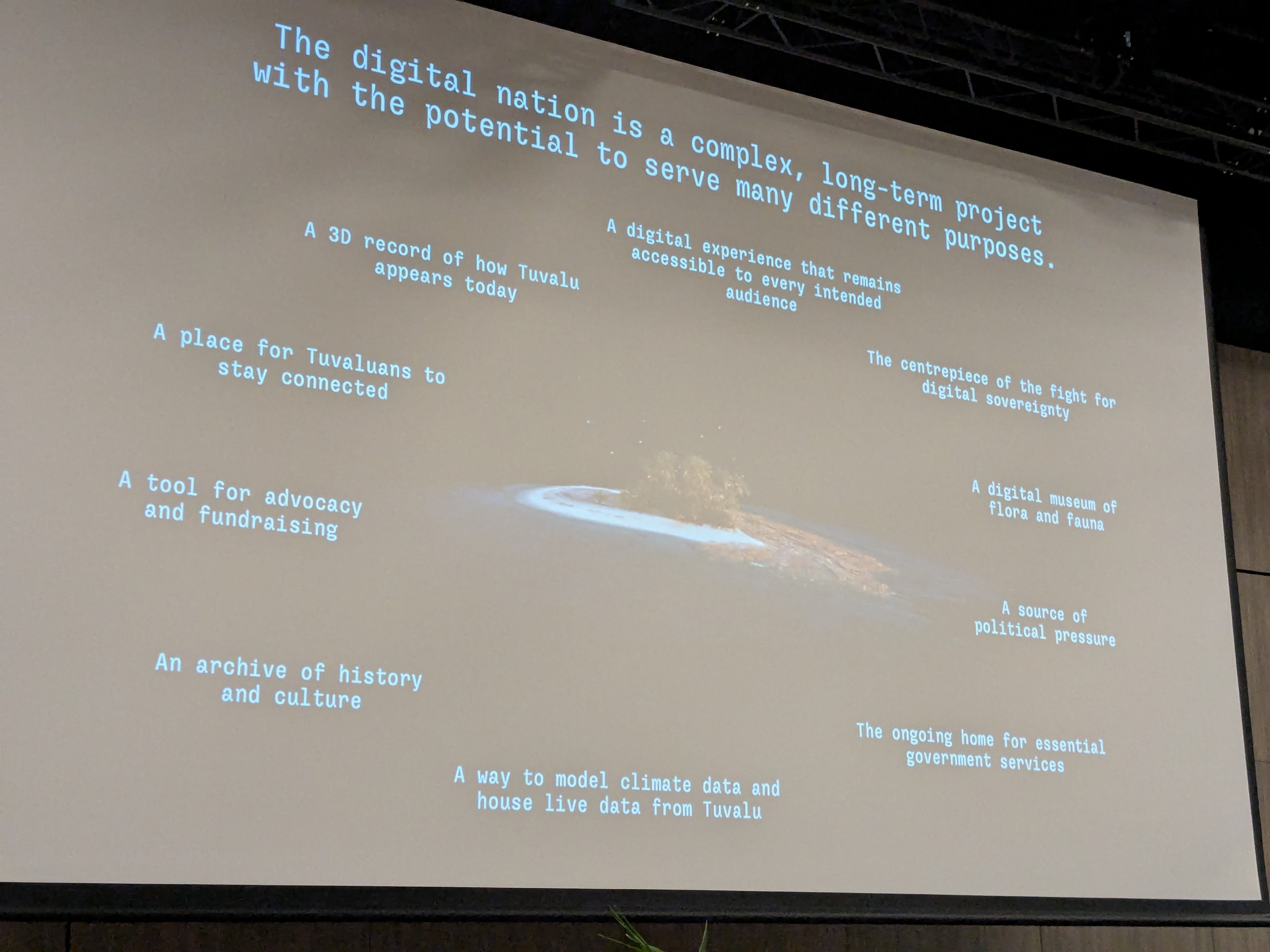
Tuvalu’s disappearing land crisis is not a problem type I have ever heard discussed in digital preservation spaces, though it ties into some pressing concerns in the field such as climate change, data sovereignty, and advocacy. Hon. Kofe’s talk validates the idea that there is more we can learn from communities not traditionally present in digital preservation spaces and that solving issues for the global north does not necessarily solve issues for the world.
Many of the attendees came from islands in the South Pacific or parts of Southeast Asia and presented on topics and issues affecting their regions. In the panel “Stories From the Region: Pragmatic Digital Preservation,” practitioners from institutions in the region discuss how they are doing digital preservation with limited funding and technical resources, environmental concerns, and mismanaged recordkeeping by donors and governments. In the Birds-of-a-Feather session “No money no resources! How can we make digitisation simple and work within our means,” I learned that some institutions in the South Pacific only have 1GB of internet per month to work with. Those kinds of limitations are sure to change how archivists and librarians work and what materials gets prioritized. The Games session for LOCKSS helped participants understand the community aspect of building a private LOCKSS network (PLN) and how it could provide an alternative for cloud storage, especially for small archives in New Zealand where data sovereignty is a much discussed topic.
Learning about the challenges faced by Pacific and Southeast Asian archives led me to thinking about how some issues are similar to those faced in Africa. At last year’s iPRES, delegates from Nigeria, Kenya, and Ghana presented on challenges to digital preservation efforts in their nations and institutions. Hearing about the humid conditions and unreliable electricity in some South Pacific nations reminded me of discussions I’ve had with some African information professionals since the last conference. How, and what, can these two distant regions learn from each other and share ideas to solve similar issues?
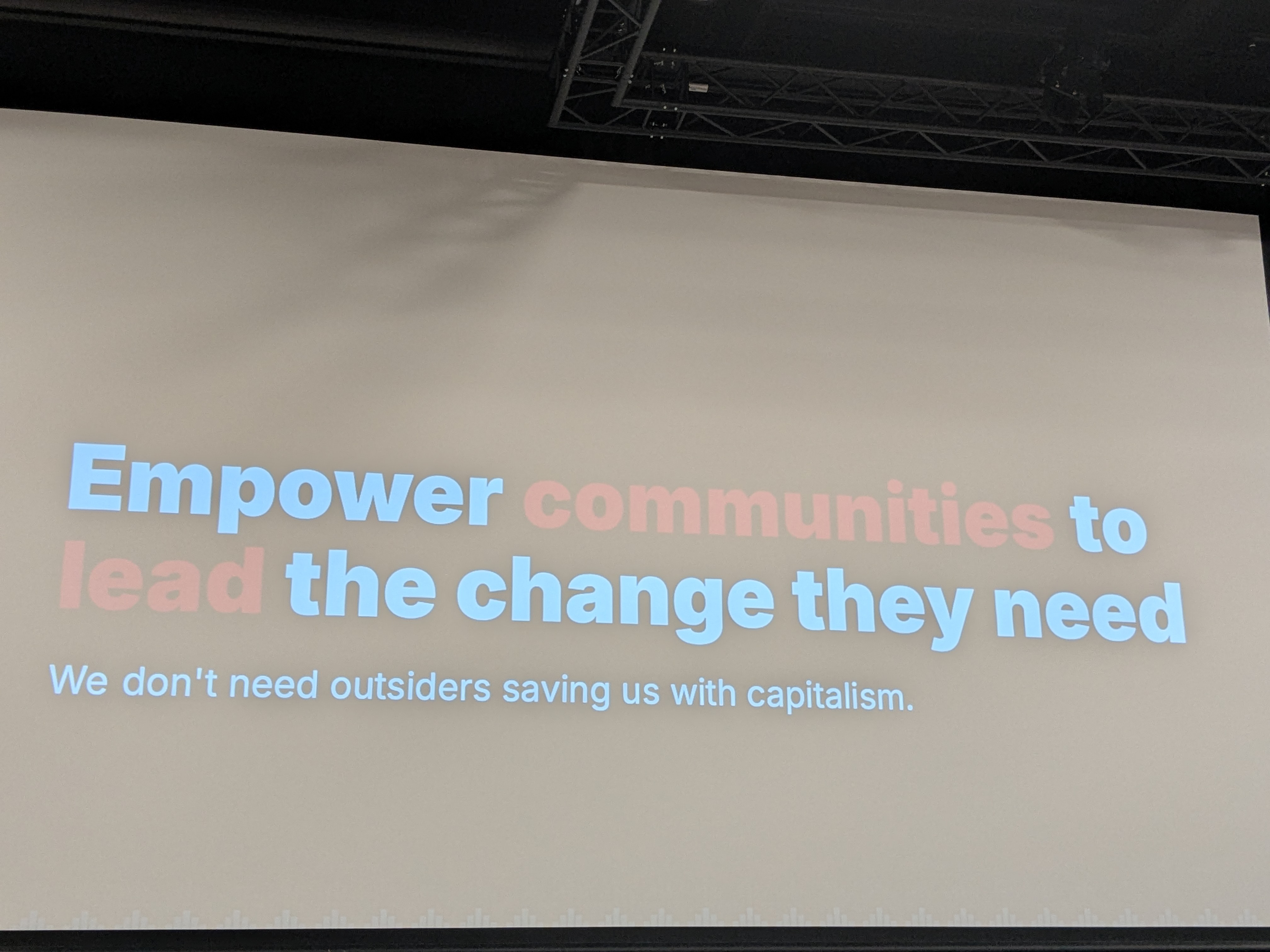
Unlike a lot of other library and archives conferences lately, conversation around AI was minimal. The focus of many of the sessions was on how we can do this work, preserve and safeguard cultural heritage, with less material resources and without the latest technology. How do we work together, network skills and expertise across national or regional boundaries, advocate for the importance of preserving indigenous languages and knowledge? The technical aspect of digital preservation work was still well represented in session such as workshops and the Bake-Off tools demos. The workshops on digital preservation in the cloud and estimating your digital preservation service’s carbon footprint provided practical resources and guidance that can assist the RAC as its digital preservation program continues to develop. The emphasis, however, of this year’s conference lied in acknowledging the need to nurture the root of our work: people.