This spring, I attended several conferences with digital preservation as either the focus or a major theme. The Digital Preservation Coalition (DPC) held their second annual Americas Member Forum in New York City in April, providing a hybrid networking opportunity and platform for members to discuss their current projects and challenges. In early May, I was invited to attend a collaborative convening at the Getty Conservation Institute (GCI) called Designing Digital Preservation Strategies Across Contexts. This was my first time attending this type of event, with three days of discussion among participants from around the world on digital preservation practice, education, and opportunities to support and grow the community of practice. The Best Practices Exchange (BPE) conference took place in Indianapolis and featured talks on cloud environments for digital preservation and strategies to find support as a new practitioner in the field. One of my all-time favorite conferences, the Texas Conference on Digital Libraries (TCDL), demonstrated how peer support and iterative approaches can make our work a bit more fun. While these events occurred over several weeks and in different parts of the country, I found some similar themes being discussed across events.
Digital Preservation in the Cloud
More and more institutions are doing digital preservation in some kind of cloud system. Presentations and conversations across the events I attended this spring touched on complications in migrating to cloud from on-premises storage, such as differences in storage technologies and costs. Discussions about commercial cloud vendors surfaced issues of trust when it comes to file integrity checking and the reporting environmental impact data. The underlying frustration I heard was the lack of transparency and the control practitioners have to give up to a small number of vendors whose businesses are not centered on archives and cultural heritage preservation. The technology isn’t necessarily the problem, it’s the governance.
The governance issue even influences how we assess digital preservation programs and systems. A great panel at BPE showed how practitioners at different institutions adapted the NDSA maturity model to reflect realities of working in the cloud. This was personally validating for me as I begin looking at assessment templates and wondering how to assess aspects of digital preservation such as storage hardware maintenance and integrity checking when these are encompassed in cloud services that provide limited visibility into their practices. Knowing other folks in the field are thinking about this lets us know we have peers we can turn to for guidance and support.
Assessments
Assessments were another major topic across these spring events. Aside from the cloud adjustments presented at BPE, there were presentations and workshops around the DPC Rapid Assessment Model (RAM) at the Members Forum. As the RAC gets ready to engage in a collaborative cross-team assessment, it was helpful to hear about the tactics used and the challenges faced at another institution piloting a similar project. Though the RAM is designed so it can be completed quickly by a single person, an assessment that compiles the wide-ranging and deep knowledge at an institution will give a fuller and more accurate picture of our digital preservation capabilities.
In Texas, member institutions of the TDL Digital Preservation Interest Group piloted a peer assessment program modeled after the Digital POWRR Peer Assessment program. One of the main benefits reported by the TDL membership was gaining an accountability partner and having dedicated time scheduled to review organizational capabilities. The resulting assessment results also serve as advocacy tools, demonstrating organizational needs and comparison results at a similar institution.
Education and Training
How to acquire the skills and training necessary to do digital preservation was a major focus of the Designing Digital Preservation Strategies Across Contexts convening. The collaborative convening at the GCI brought together practitioners and educators from across the world to discuss what kinds of support our field needs. One of the common sentiments I heard from the room was the marginal focus digital preservation gets in formal education programs and limited number of professional development opportunities.
The project leads for Digital POWRR were present at this and other gatherings, presenting on over a decade of digital preservation training for informational professionals working with limited resources. As an alum of the Digital POWRR Institutes, I appreciated the opportunity to try out tools and workflows with sample collections while learning the importance of polity and strategy development. It was the kind of training not often found in graduate programs, at least not in the US.
While organizations like DPOE-N and NEDCC provide virtual trainings predominantly for the Americas, and webinars presented by the DPC and its membership serve international audiences, it seems most practitioners learn their skills through ad hoc training, trial by fire on the job, or through peer collaborations and professional networks. With limited formal programs and dwindling funds for trainings like Digital POWRR, how do we prepare practitioners to do this work?
What’s Next
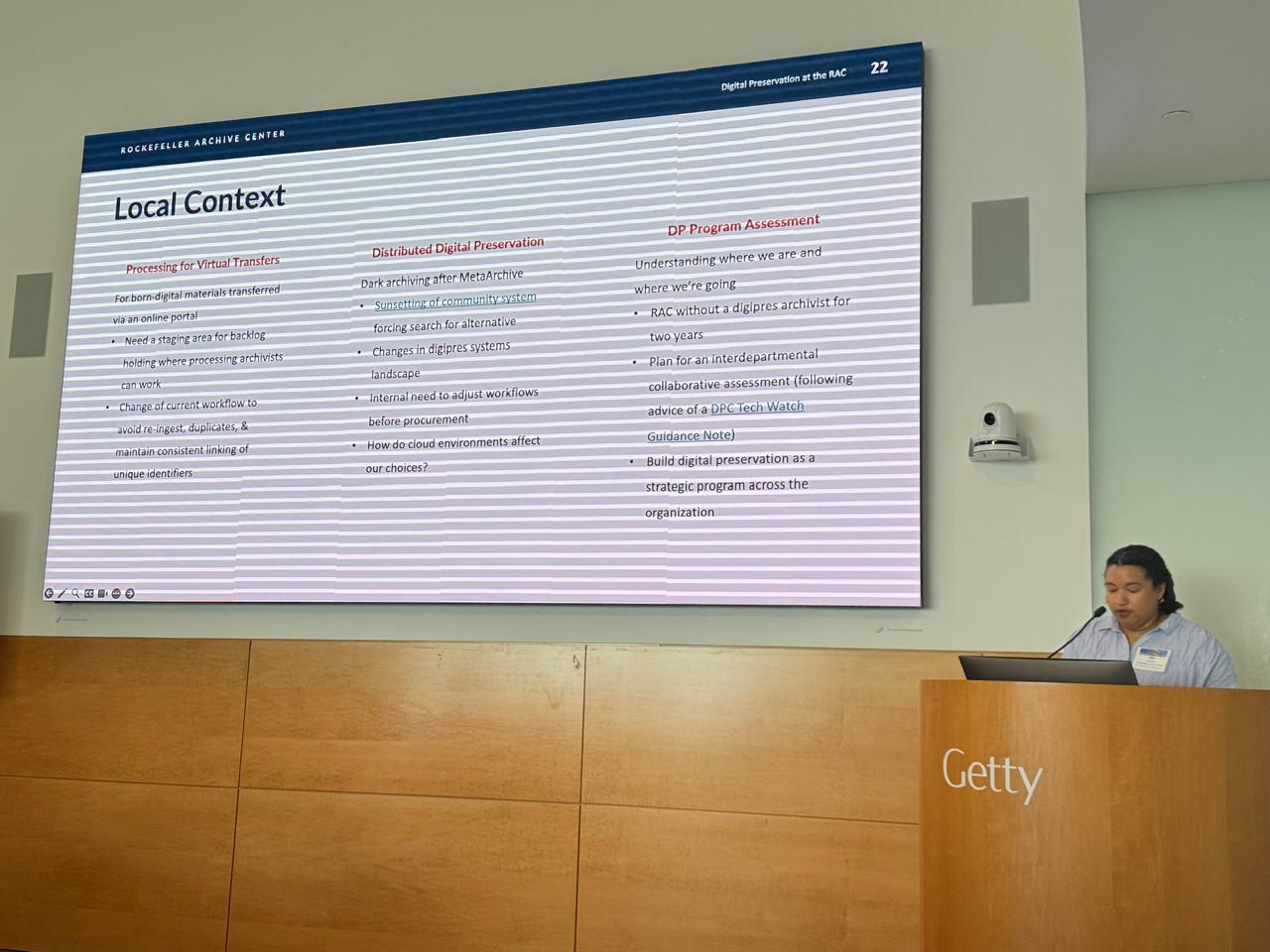
The presentations and conversations at digital preservation events this spring supports the steps the RAC is taking to improve its digital preservation program and engage with the diverse community of practitioners. And it’s not over. While the RAC spends its summer working on on-going storage migrations and starting a collaborative assessment of our digital preservation capabilities, we are also looking forward to opportunities to share our work and learn from colleagues at iPRES and NDSA DigiPres this fall.